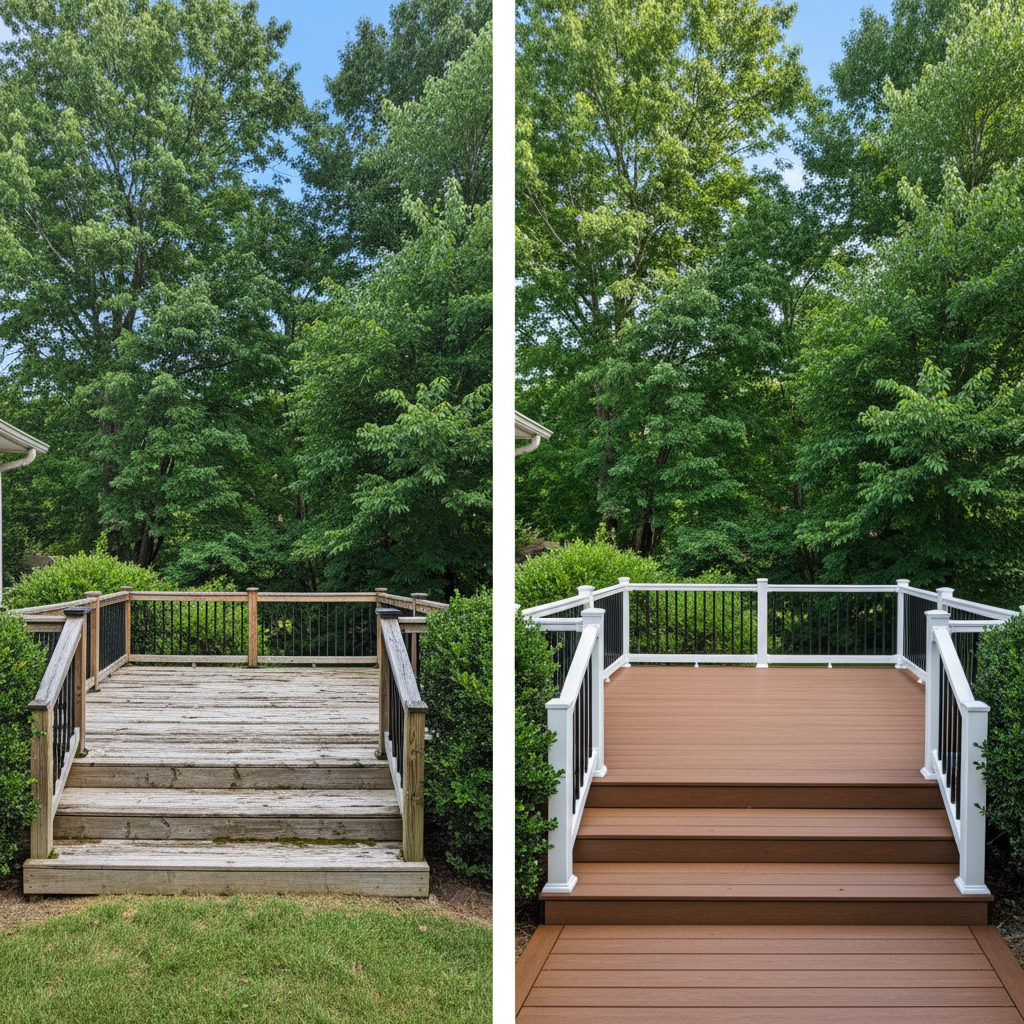
Alright, so you're thinking about a Trex deck for your place here in Halls. Smart move, honestly. Trex is tough, looks good, and it's a lot less hassle than wood. But when you get down to picking out the actual boards, you'll run into a choice: grooved edge or square edge. It might seem like a tiny detail, but trust me, it changes things. Let's dig into what each means for your deck.
What's the Difference?
It's pretty simple when you actually see it. Square edge Trex boards look just like regular lumber on all four sides. They're solid all the way around. Grooved edge boards, though, have a little channel, or groove, cut into the long sides. Imagine a slot running right down each edge.
Installation: Hidden Fasteners vs. Top Screws
This is where the biggest difference really shows up. With square edge boards, you usually fasten them by screwing right through the top of the board into the joists underneath. You'll see the screw heads, just like with a traditional wood deck. We can use color-matched screws, which helps them blend in, but they're still visible.
Grooved edge boards are actually designed for hidden fasteners. These are small clips that slide into the grooves on the sides of the boards. The clips then screw into the joists, holding the boards down without any screws showing on the deck's surface. It's a much cleaner look, no doubt about it.
Appearance: Which One Looks Better?
If you're aiming for that super clean, seamless look, grooved edge with hidden fasteners is definitely the way to go. You won't see any screws, so the deck surface is smooth and uninterrupted. It gives a more modern, finished feel. For many folks, especially those building a new, high-end outdoor living space near the Forked Deer River, this is a huge draw.
Square edge boards, with their visible screws, have a more traditional appearance. Some people actually prefer this, since it mimics the look of a classic wood deck. It's not necessarily worse, just different, you know? If you're replacing an old wood deck and want to keep a similar vibe but upgrade the material, square edge can be a good fit.
Cost: What's the Damage?
Let's not beat around the bush; cost is always a factor. Generally speaking, square edge Trex boards themselves are often a little less expensive per linear foot than grooved edge boards. The real cost difference, though, comes down to the fasteners and the installation process.
Hidden fasteners cost more than standard deck screws. They're specialized hardware, and you need quite a few of them. Plus, putting them in can sometimes take a bit longer, which adds to labor costs. So, while the board price might be slightly lower for square edge, the overall project cost for a grooved deck with hidden fasteners usually ends up being higher. You're paying for that premium, screw-free look, after all.
Durability & Maintenance: Any Real Difference?
When it comes to the Trex material itself, there's no difference in durability or maintenance between a grooved and a square edge board of the same Trex line (like Trex Enhance or Trex Transcend). They're both going to resist rot, splinters, and insect damage, and they'll hold up great to our Halls weather, from those hot, humid summers to the occasional icy winter day.
The only minor point of distinction might be with cleaning. With hidden fasteners, you don't have those tiny screw head depressions where dirt or grime could potentially collect. It's a small thing, but it contributes to that smoother, easier-to-clean surface.
Repairs & Replacement: What If Something Goes Wrong?
This is where square edge can sometimes have a slight advantage. If a single board gets damaged, and it's a square edge board, we can usually just unscrew it and replace it. Pretty straightforward.
With hidden fasteners, replacing a single board in the middle of a deck can be a bit more involved. Sometimes you have to remove several surrounding boards just to get to the clips holding the damaged one in place. It's not impossible, but it definitely takes more time and effort.
My Recommendation for Halls Homeowners
Look, both options are solid choices for a Trex deck. You're getting a fantastic, low-maintenance product either way. But if you're asking me, and you want my honest opinion for most folks around here, I lean towards the grooved edge with hidden fasteners for the main deck surface.
Why? Because for most homeowners investing in Trex, that clean, screw-free aesthetic is a huge part of the appeal. You're spending good money on a premium product, so why not get the premium look? It just elevates the whole outdoor space. It adds to your home's value and curb appeal, especially in neighborhoods like the ones off Highway 88 where people really care about their property.
Now, where do I use square edge? I often use square edge boards for the perimeter of the deck, like a picture frame border. This gives a nice finished look and allows us to fasten those edge boards securely without needing a groove on the outside edge. It's a combination that gives you the best of both worlds: clean lines on the main deck and a sturdy, attractive border.
Ultimately, it comes down to your budget and what look you're going for. If you're on a tighter budget and don't mind visible fasteners, square edge is a perfectly good choice. But if you want that sleek, modern finish that really makes your Trex deck pop, grooved edge is the way to go. Give us a call at Coastal Deck Solutions, and we can walk you through samples and help you pick what's right for your home.