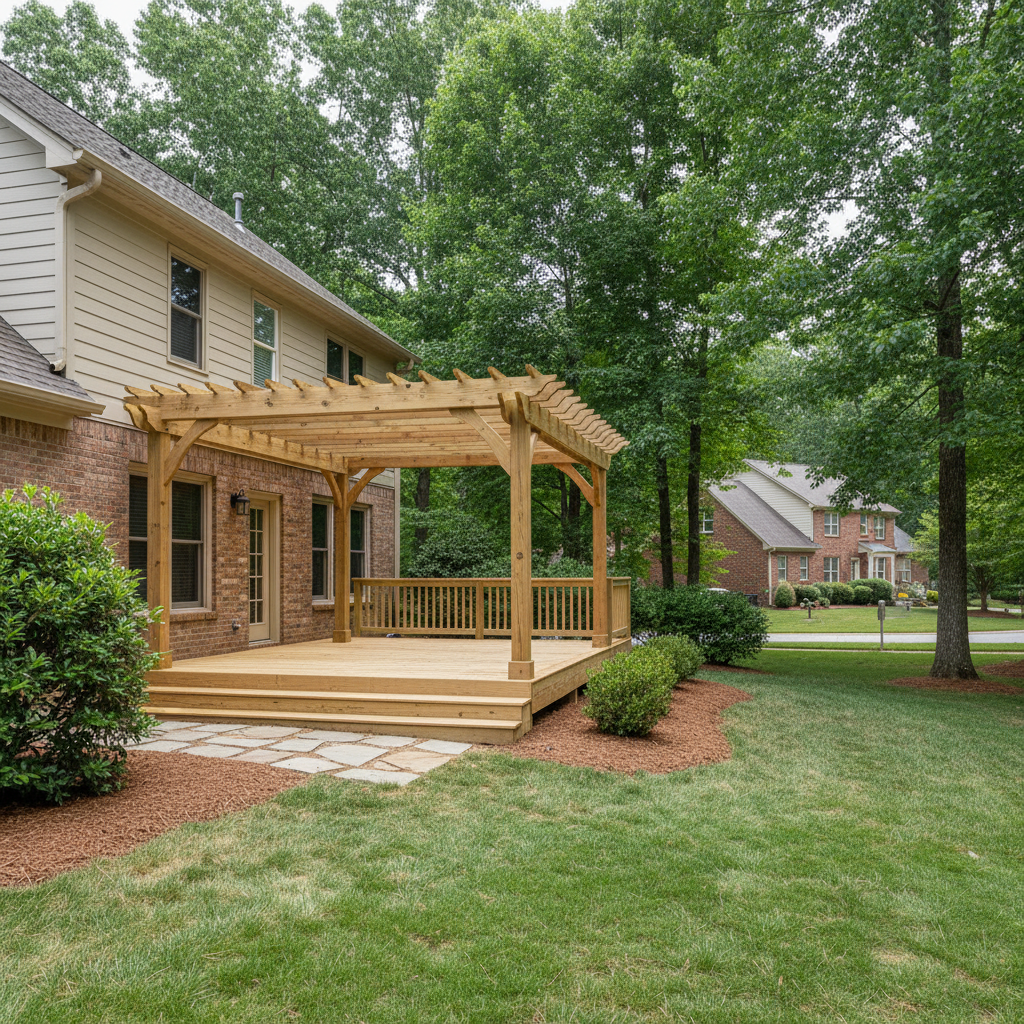
So, you're thinking about adding a pergola, huh? That's a really smart move for any homeowner here in Halls, whether you're living in those more established neighborhoods near Whitten Road or closer to the river in one of the newer developments. A good pergola isn't just some fancy garden decoration; it's a real investment in your outdoor living space. And, let's be honest, it needs to be built tough enough to handle our Tennessee weather.
Why a Pergola Just Makes Sense for Halls Homes
We get some serious sun around here, especially in July and August. I've seen plenty of folks try to make do with those flimsy umbrellas, and they just don't cut it. A well-designed pergola offers that much-needed break from the direct sun, letting you actually enjoy your patio or deck even during the hottest parts of the day. But it's more than just shade, you know? It really defines a space, creating an outdoor room, and can seriously boost your home's curb appeal. Think about those beautiful places in the Riverwood Plantation area – a custom pergola can take an already nice backyard and make it truly exceptional.
We also get our share of rain. While a pergola isn't a fully enclosed roof, we can design it to offer some protection. Add a retractable canopy or even some strategically placed lattice, and suddenly you've got a versatile space that works in more conditions. It's really about extending your usable living area, plain and simple.
Picking the Right Materials for Our Climate
When we're talking pergolas in Halls, choosing the right material is a huge deal. You've got options like wood – cedar, redwood, or pressure-treated pine – and then there's aluminum or vinyl. Each one has its good points and bad points, especially when you think about our humid summers and those occasional winter ice storms we get.
- Wood: This gives you that classic look, and you can stain or paint it to match your house. Cedar and redwood naturally resist rot and bugs, but they'll cost you more upfront. Pressure-treated pine is easier on the wallet, but it needs regular maintenance to keep it looking good and holding up. You'll definitely need to seal or stain it every few years to protect it from the elements.
- Aluminum: Super low maintenance, really durable, and it won't rot, warp, or get eaten by bugs. It's a fantastic choice if you want something that's going to last with minimal fuss. The only real downside is it can sometimes look a bit more modern, which might not fit every home's style.
- Vinyl: Also very low maintenance – just wash it down every now and then. It's durable and comes in various styles. The main thing to consider is it can sometimes feel less substantial than wood or aluminum, and your color choices might be a bit more limited.
I've seen pergolas built with all these materials around here. The key is finding what works for your budget, your style, and how much time you actually want to spend on upkeep. We can chat through what makes the most sense for your specific situation.
Local Expertise Matters: Foundations and Permits
This isn't just about screwing a few boards together, you know? A pergola, especially a bigger one, really needs a solid foundation. Here in Halls, we've got all sorts of soil conditions, from the sandier loam closer to the river to some heavier clay soils further east. You have to make sure your posts are set deep enough and properly anchored to keep them from shifting or leaning over time. We're talking about footings that can handle our freeze-thaw cycles and those strong winds.
Then there's the permitting. Depending on its size and how it attaches, you might need a building permit from the local authorities. You really don't want to build something only to find out later you have to tear it down or pay fines. As Coastal Deck Solutions, we handle all that for you. We know the local codes and what's required, so you don't have to worry about the paperwork or inspections. It's just part of doing business right in our community.
Design Considerations for Your Home
When I'm designing a pergola for a client, I'm not just thinking about the structure itself. I'm looking at your house, your existing deck or patio, and your landscaping. Does your home have a traditional brick facade, or is it a more modern build? We want the pergola to look like it belongs there, not like some afterthought. We'll consider the height, how far apart the rafters are, and whether you want to add features like built-in lighting, fans, or even privacy screens.
A pergola can be attached to your house, or it can stand freely in your yard. An attached pergola often feels like a natural extension of your home, while a freestanding one can create a distinct zone in your yard – maybe over an outdoor kitchen or by a fire pit. We'll talk about the kind of experience you're hoping to create and design something that fits perfectly.
Don't just settle for some off-the-shelf kit that might not hold up or look right. Get something custom-built that's designed for our specific conditions and your unique home. It'll be a space you'll enjoy for years to come, trust me.